
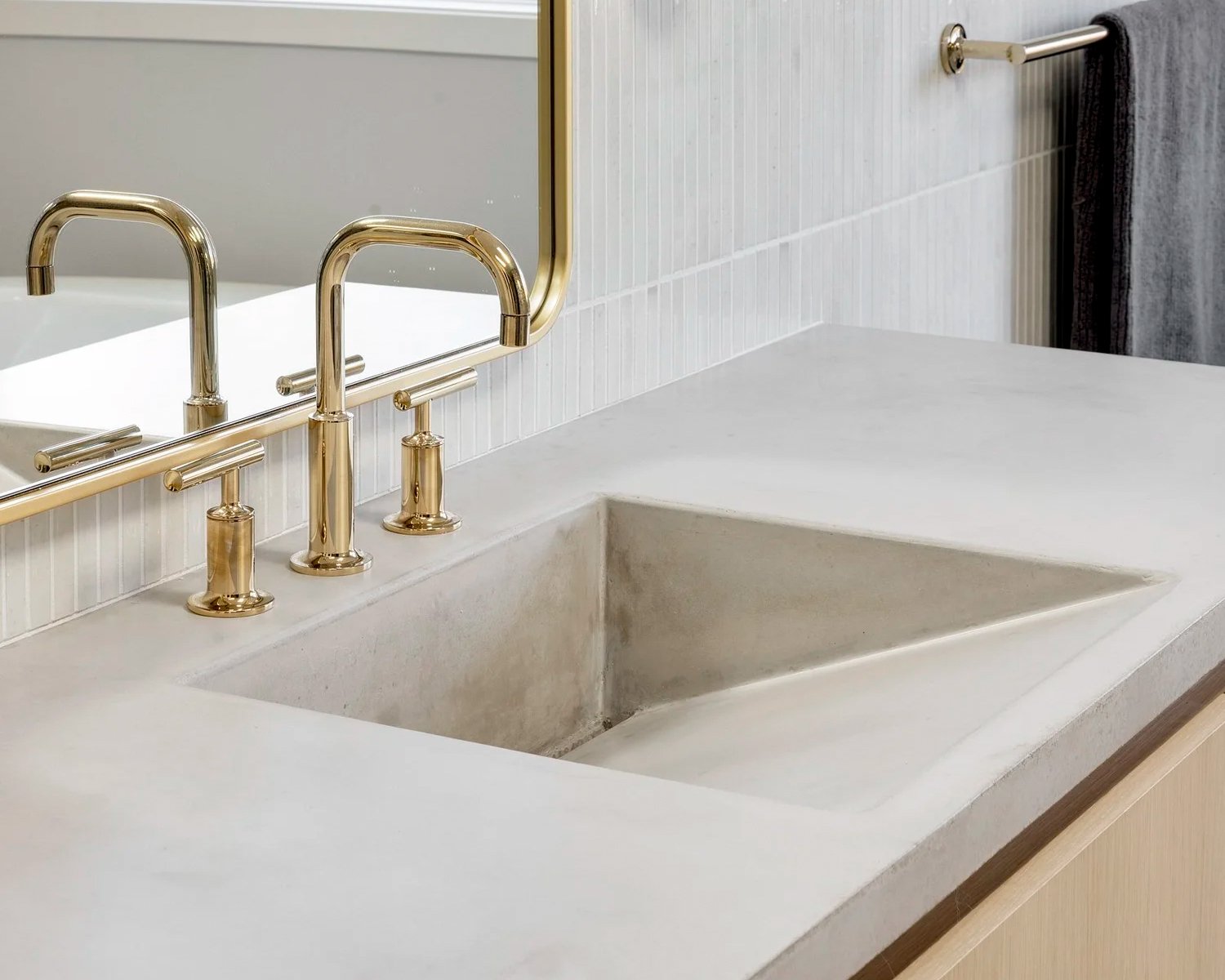
Before it tells you anything else, every home tells you what it's made of. Walk through the front door, and your hand instantly feels the difference between raw white oak and a painted railing before your eyes have caught up. That instinct, the one that reads texture and weight without needing to think about it, is exactly why the material palette deserves more attention in the design world than it normally gets.
At Stockwell Homes, we treat materials like a language, not a shopping list. Before we choose a single tile or place an order to have a countertop slab cut, we ask what the house is trying to tell us. Is it a quiet retreat meant to soften the noise of the day? A family-friendly house built for spills, muddy boots, and long dinners that run late because half the neighborhood turned up? The answer shapes everything that follows because a carefully chosen material palette reads as calm and intentional, while one assembled from Instagram trends and showroom favorites tends to feel scattered no matter how expensive or aesthetically pleasing the individual pieces are.
Start with How the Space Will Be Used
Materials have to work in the home. Maybe that seems like common sense, but it's so hard to be sensible when you're surrounded by stunning materials. A honed marble counter is gorgeous, but it also stains if you look at it wrong, so we reserve it for spaces where that patina is part of the appeal instead of a daily frustration. In a busy kitchen, we often lean on quartzite or a durable soapstone instead, something that can take a hot pan and a squeeze of lemon without flinching. This isn't about avoiding beautiful materials, but it is about matching their character to the life that will actually happen around them.
The same logic applies to flooring, cabinetry, and even your hardware. Wide plank white oak warms a living room and holds up to decades of foot traffic. A more delicate material, like a pale limestone, might be better suited to a mudroom bench or a bathroom floor where its coolness becomes a tiny daily pleasure rather than a liability.
Let a Few Materials Do the Talking
One of the most common mistakes we see in early design conversations is the instinct to introduce too many materials at once. A home with six different wood tones, three metals, and a handful of competing stones rarely feels rich. Unless your aesthetic leans heavily into the realm of eclectic, mixing so many materials just feels busy. Restraint is what allows a palette to have some breathing room.
We typically build a project around three or four anchor materials and let everything else support them. Perhaps it's white oak, blackened steel, a warm limestone, and unlacquered brass. Once those anchors are set, nearly every design question that follows, from the tile in a powder room to the pull on a kitchen drawer, has an obvious answer. The palette becomes a filter. If a material doesn't relate to the anchors, it doesn't belong, no matter how much we love it on its own. (It hurts us, too.)
Respect the Region
Minnesota homes live differently than homes down, and the material choices should reflect that. Summer humidity, the winter freeze, and tracking in de-icing chemicals are not abstract concerns here. They dictate real decisions, like choosing a heavy-grade hardware finish over standard brass, or specifying a stone that won't crack once the temperature drops below freezing. A palette that ignores climate might photograph well on day one and look tired within a few years.
This is where local knowledge matters every bit as much as taste. We've watched homeowners fall for a material in a magazine spread from a very different climate, only to find it simply isn't built for Minnesota life. Part of our job is steering those choices toward options that retain their beauty here.
Texture Carries as Much Weight as Color
It's easy to focus on color when building a palette, but texture often does more of the emotional work. A room built entirely from smooth, polished surfaces can feel sleek but cold. Introduce a nubby linen, a hand-troweled plaster wall, or a piece of reclaimed wood, and suddenly the same room feels grounded and lived in.
We think of texture as the difference between a photograph of a room and the memory of standing inside it. Photographs capture color easily. Memory holds onto how a surface felt, how light moved across it in the late afternoon, and even whether it invited a hand to rest on it. A carefully chosen material palette accounts for both.
Purpose Over Trend
Trends move quickly, and materials that feel fresh today can feel dated within a few years if they were chosen for the moment rather than a deeper meaning. We encourage clients to ask a simple question before committing to any material: will I still love this when the trend has passed? Would I still want this if no one else knew I owned it? If the honest answer involves any hesitation, it's worth digging deeper into what's actually driving those choices.
This doesn't necessarily mean playing it safe. Some of our most memorable projects use bold materials, a dramatic slab of veined stone, or a deeply saturated tile. But those choices were made with intention and tied to a clear vision for the space, not just borrowed from a passing aesthetic. That level of distinction is what separates a home that feels timeless from one that feels like a snapshot of a particular year. (Remember "millennial pink" in the early 2010s?)
Choosing a material palette is one of the first and most consequential decisions in any new build or remodel. Done with purpose, it sets the tone that carries through every room, every season, and every year the home is lived in. At Stockwell Homes, we always begin with that sense of purpose. Refreshing your home every couple of years with new furnishings or a fresh coat of paint is one thing, but we want you to love your anchor materials for years to come.
Are you looking to design a home you'll love for the next decade? Get in touch with Stockwell Homes. We'd love to help.