
The Remarkable Responsibility of Building Homes
I’m coming up on the ten-year anniversary of my start in the homebuilding industry, and besides reflecting on what an astonishing blink of an eye a decade can feel like, I’ve been thinking about the weight of responsibility this profession has taught me—and the many lessons learned along the way (some more painful than others).
I’ve come to realize there’s no other industry quite like home building. People outside the field may notice the cranes or scaffolding on the skyline, the fresh lumber or the unsightly dumpster at a jobsite—if we’re lucky, they notice the polished finishes at the end. Those of us who live inside the process know it’s so much more. A home is not a product. It’s an act of trust, of imagination, of lasting impact. Every step requires people who care at a level that borders on obsession.
Home building is one of the few professions that demands encyclopedic fluency in the world. A builder must understand earth and weather, structure and science, artistry and psychology. We speak the languages of architects and engineers, the constraints of code officials, the motivations of tradespeople, the hopes of families. To create something that stands, shelters, and inspires, we must comprehend far more than materials—we must understand the human experience.
Every decision, every intersection of expertise, is a negotiation between what is possible and what is right. It’s the orchestration of human talent, guided by shared standards and meticulous care, that transforms drawings into lived experiences.

“The smallest judgment calls ripple outward into how a family will live for decades. It’s humbling work.”
Collaboration is our raw material. A wall stands straight because dozens of hands and minds agreed it should. A kitchen feels intuitive because hundreds of small decisions were made with care—measurements, adjacencies, clearances, ergonomics. At the center of it all is trust. Clients trust teams with their life savings and their private lives. Trades trust one another’s work, knowing quality is either shared or compromised. Contractors trust that each person will show up, follow through, and pour excellence into the invisible layers that only future generations will see.
Precision is not a luxury—it’s a moral obligation. We are building the spaces where celebrations erupt, children grow, mistakes are forgiven, and futures unfold. Home is where people are most themselves. That deserves a level of attention that outpaces ego.
What captivates me most is the way art and engineering constantly collide in this profession. Precision and creativity are in constant dialogue; each decision carries both logic and meaning. A beam placement affects not just structure but light. A finish choice changes the way a space feels at dawn and at dusk. The smallest judgment calls ripple outward into how a family will live for decades. It’s humbling work.
This craft also demands an understanding of how people live, move, and experience space—how light shifts through the day, how textures communicate comfort, how a room can hold both energy and stillness.
To build homes at a high level requires insatiable curiosity. You learn to listen differently—to read between the lines of a client’s story, to anticipate what they can’t yet articulate. You become fluent in the language of possibility, always balancing what can be imagined with what can be built. It’s a practice in empathy and precision, patience and adaptability.
At Stockwell Homes, we approach each project as both a design problem and a human collaboration. Technical mastery matters—of course it does—but it’s the conversations, the partnerships, and the shared pursuit of something better that define the experience. We’re not just building spaces; we’re shaping the frameworks where people’s lives unfold.
The longer I do this, the more convinced I am that building isn’t merely a profession—it’s a philosophy of care. Every drawing, every site meeting, every alignment check is an act of respect—for craft, for collaboration, and for the people who will one day call this space home.
Few industries tie responsibility so tightly to imagination. Few require both rational calculation and emotional intelligence, both mastery of craft and courage to innovate. The blueprint is never just lines. It’s intention—a reflection of how people want to live.
There’s no industry like it. And for those of us lucky enough to live in its rhythm, there’s nothing more fulfilling than knowing we’ve made something real—something that will hold, inspire, and quietly shape the lives within it.
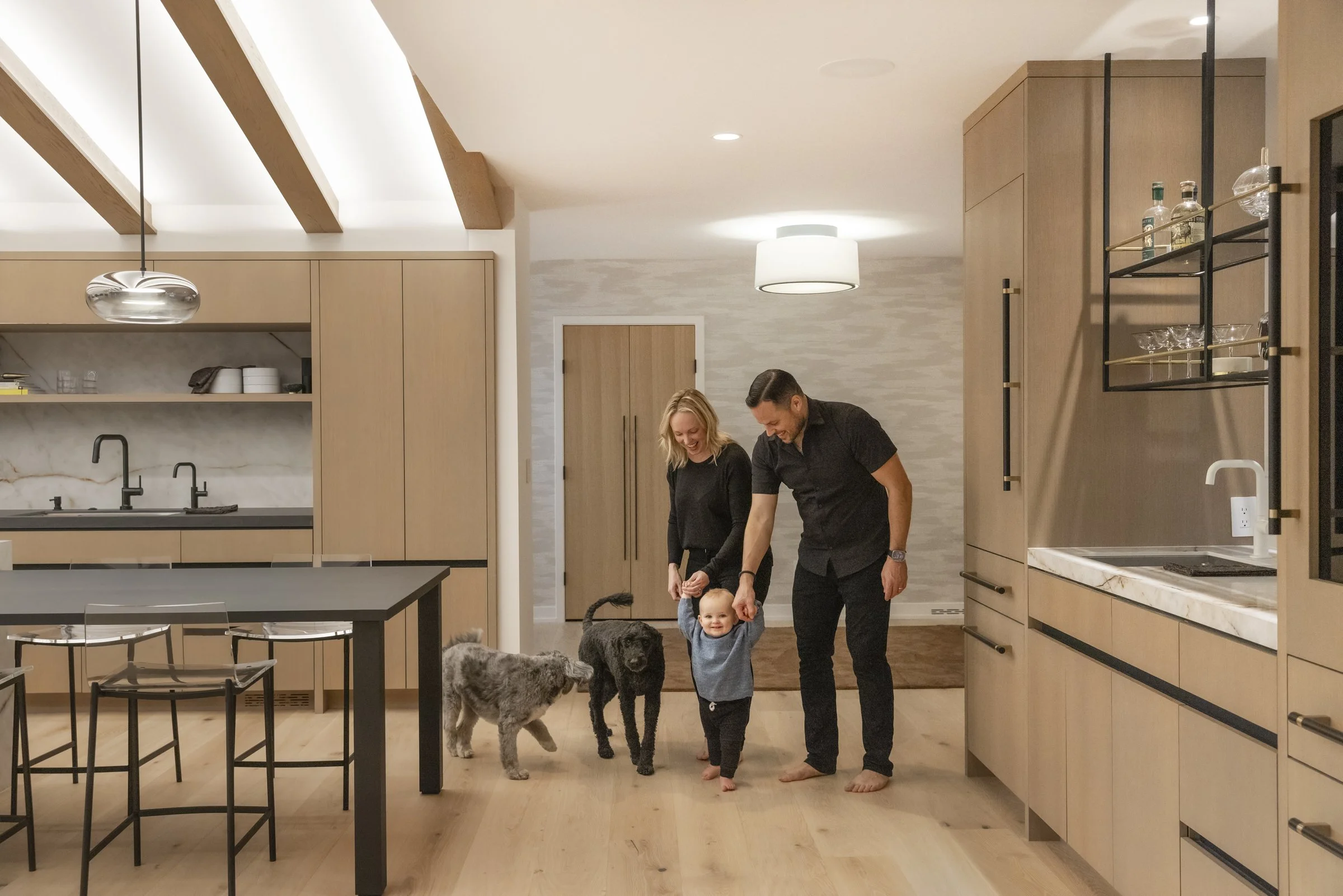
Our beautiful clients coming home to their finished space!