
Smart Home Integration: Merging Technology with Design
Smart home technology has come a long way from the early days of novelty gadgets and blinking control panels. Today, smart home integration has become less about showing off your technology and more about supporting the way you live. When done well, it becomes nearly invisible, working quietly in the background while the design remains front and center.
In thoughtful home design, technology should feel natural. It should respond to daily rhythms, simplify routines, and enhance comfort without demanding attention. The most successful smart home integration prioritizes ease, allowing technology to serve the home rather than become a focal point.
Designing Technology from the Start
The most seamless smart home integration starts early in the design process. Planning for technology at the same time as layout, lighting, and materials allows for systems to be concealed and coordinated rather than retrofitted later. This approach protects the integrity of the design while ensuring the technology functions exactly as it's intended.
Wiring locations, equipment rooms, speaker placement, and control zones all benefit from early consideration. When these elements are addressed upfront, walls remain clean, ceilings stay uncluttered, and the home feels intentional rather than overly engineered. In well designed homes, technology feels built in rather than added on.
Lighting as the Foundation of Smart Design
Lighting is often the gateway into smart home integration. Intelligent lighting systems allow homeowners to adjust brightness, color temperature, and timing with the touch of a button, supporting function and mood throughout the day. Morning light can feel crisp and energizing, while evening settings soften to encourage relaxation.
Smart lighting also supports good design by reducing visual noise. Instead of multiple switches scattered across your walls, a single keypad or app can control layered lighting scenes. This keeps walls clean and architectural details uninterrupted. Thoughtful smart home integration in lighting allows spaces to shift naturally without calling attention to the technology behind them, allowing your smart devices to work with your aesthetic, not against it.
Climate Control and Comfort
Temperature has a direct impact on the way a home feels. Smart climate systems help maintain comfort while adapting to daily routines and seasonal changes. Rather than manually adjusting their thermostats, homeowners can rely on systems that learn their preferences and respond automatically.
Zoned climate control allows different areas of the home to operate independently, supporting comfort and efficiency. Bedrooms can stay cool at night, while living areas adjust during the day. In smart home integration, climate systems work quietly and predictably, creating an environment that feels consistently comfortable without the need for constant input.
Audio and Visual Integration
Sound and media play an important role in daily life, but they should never overwhelm a space. Smart home integration allows audio and visual systems to be woven into the architecture so they enhance your listening and viewing experience without dominating the room.
Flush-mounted speakers, concealed wiring, and carefully placed screens allow technology to disappear when not in use. Music can flow throughout the home at a consistent level, while media spaces remain calm and uncluttered. When audio and visual systems are planned alongside furnishings and finishes, the result feels balanced and intentional.
Smart Kitchens That Support Daily Life
The kitchen is one of the most active spaces in any home, making it a natural place for smart home integration. Technology here is less about spectacle and more about support. Smart appliances help streamline cooking, help you stay on top of groceries, and improve efficiency without changing the look of the space.
Integrated refrigeration systems, discreet charging stations, and voice-controlled assistants allow homeowners to stay connected while keeping counters clear. Smart home integration in the kitchen works best when it complements workflow and preserves the overall warmth and functionality of the room.
Bathrooms and Personal Wellness
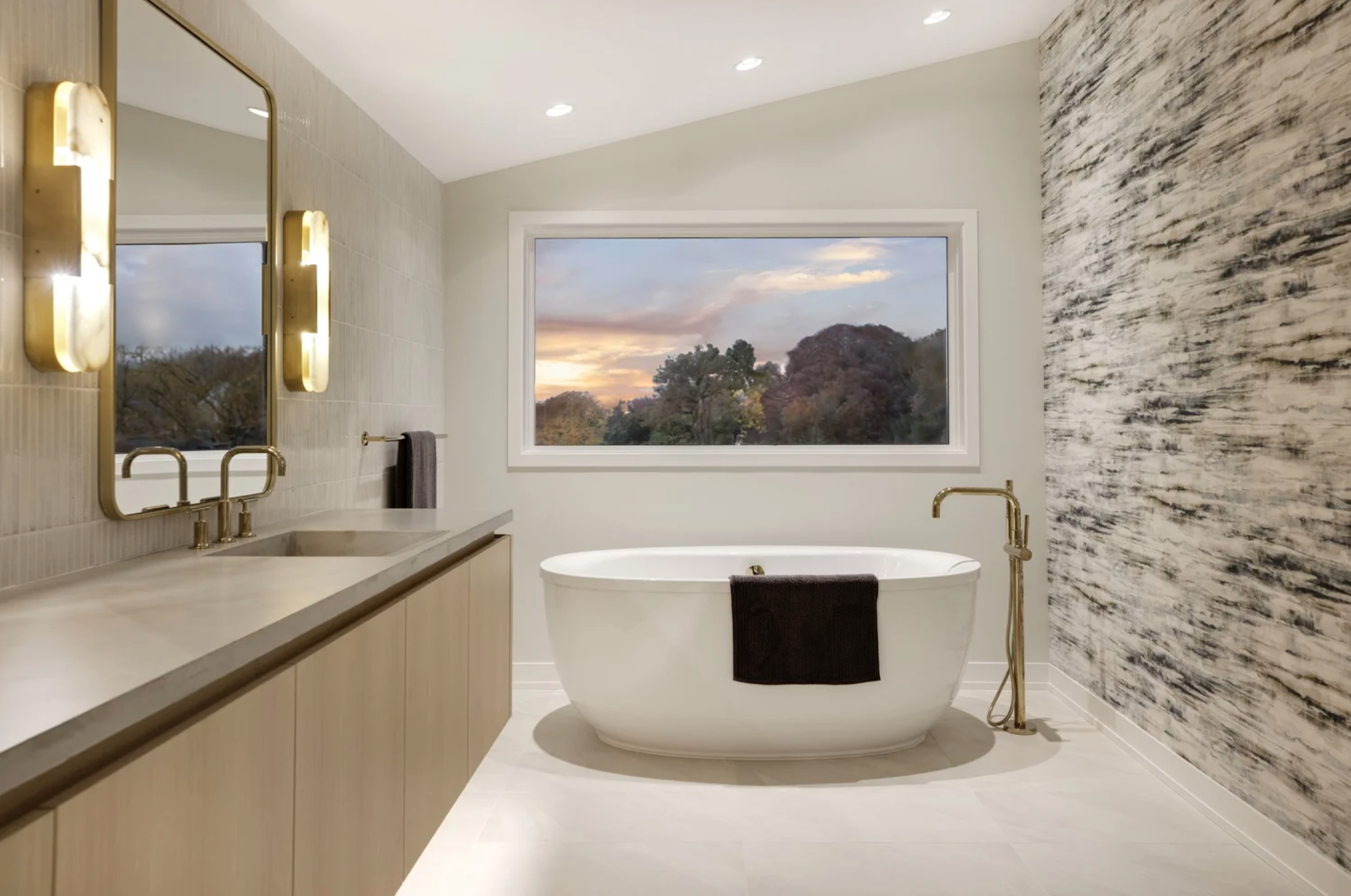
Technology is increasingly being used to support wellness, and smart home integration in bathrooms reflects this shift. Heated floors, programmable showers, smart mirrors, and lighting scenes can transform daily routines into time spent in what feels like an at-home spa.
Smart tech in the bathroom works best when controls are simple, finishes remain consistent, and the technology blends into the overall design. Smart home integration in personal spaces should feel restorative, supporting comfort without unnecessary complexity.
Security and Peace of Mind
One of the most practical benefits of smart home integration is peace of mind. Smart security systems allow homeowners to monitor and manage homes whether they are inside or away on vacation.
Discreet cameras, integrated door systems, and automated lighting schedules contribute to safety while maintaining privacy and aesthetics. The best systems are reliable and unobtrusive, offering reassurance without creating visual clutter.
Simplicity in Control
As technology becomes more advanced, simplicity becomes more important. Smart home integration should make life easier, not more complicated. Systems that rely on intuitive controls and streamlined interfaces are far more successful in the long run.
Whether controlled by wall-mounted keypads, mobile devices, or voice commands, technology should respond quickly and predictably. A well-designed system reduces friction rather than adding steps to your already busy routine. In thoughtfully designed homes, smart home integration feels like a natural and effortless part of your day.
Designing for Longevity
Technology evolves quickly, but good design is built to last. One of the most important considerations in smart home integration is planning for flexibility and future updates. Infrastructure should allow systems to adapt over time without requiring major disruption.
This means careful equipment placement, accessible wiring paths, and systems that can grow alongside the household. Designing with longevity in mind ensures that technology continues to serve the home for years to come.
Bringing It All Together
Smart home integration works best when it supports how people live rather than trying to change it. When technology is woven carefully into the design, it enhances comfort and efficiency while allowing the home’s character to shine.
The goal is not a house that feels high-tech but one that feels responsive to your needs: a home where lighting adjusts naturally, temperature remains comfortable, and daily routines flow with less effort. When technology and design work together, your home feels thoughtful, calm, and friction-free.
Curious about how smart home integration can work within your home design vision? At Stockwell Homes, our team approaches technology with the same care we bring to every design decision, ensuring it enhances aesthetics while improving your daily life.