
Timeless Over Trendy: Designing Homes That Endure
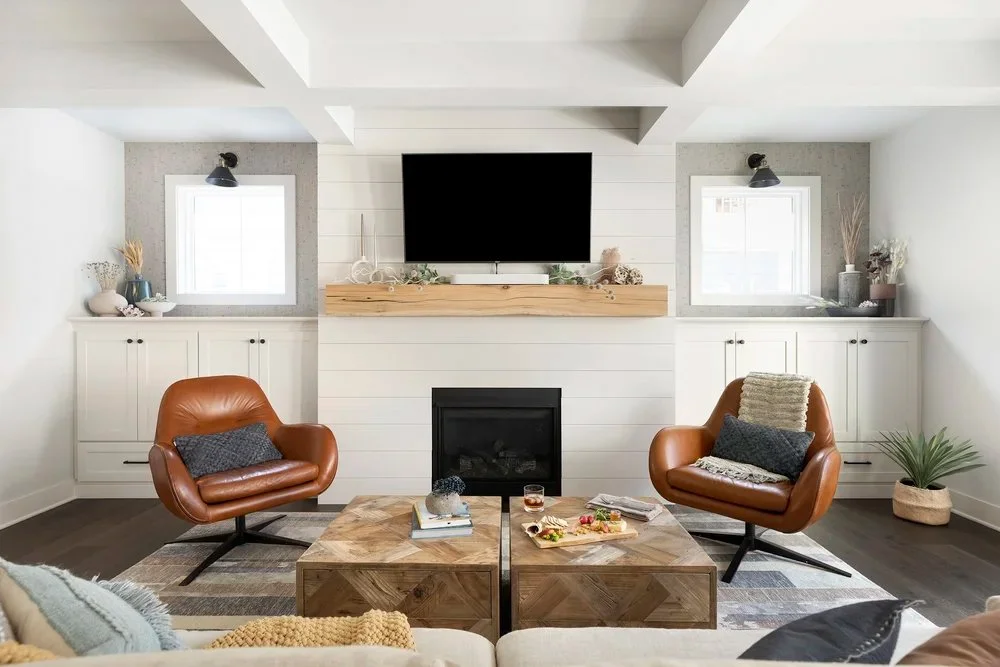
Scroll through any interior design feed for more than a few minutes, and a distinctive pattern emerges. Limewash walls. Arched doorways. All beige everything. Japandi this, Coastal Grandmother that, Tomato Girl Spring, Brat Summer. The trends (and micro-trends) cycle through so quickly now that something can go from fresh to familiar to fatigued within the span of a single renovation.
And, just like design professionals, homeowners are noticing.
More and more, the people we talk with are pushing back against the seemingly endless cycle of trends. They're tired of designing spaces that feel current for ten months and dated for the next ten years. They're asking better questions, too. "What's popular right now?" is being replaced by "what will I still love ten years from now?" That shift in thinking is one of the healthiest things happening in residential design today.
The Problem with Trend-Led Design
Trends aren't inherently bad. They're very often reflective of something real: a collective mood, a response to the visual overload of a previous era, a genuine evolution in how people want to live. But when a design decision is made primarily because it's trending, it's built on an unstable foundation. The moment the trend moves, the room moves with it – often directly into the realm of the dreaded "that's so cringe."
Ultimately, the real cost of trends isn't purely aesthetic: it's financial. Renovations are significant investments, and spaces designed around what's popular at a particular moment often require updating far sooner than they should. Timeless home design is about making choices that hold their value over time, not just about how a space looks.
What "Timeless" Actually Means
Contrary to what some people think, timeless doesn't have to mean boring. It doesn't mean safe, or beige, or stripped of personality. It means choosing elements that draw from enduring design principles rather than the Instagram cycle, opting for materials and forms and proportions that have proven themselves across decades rather than seasons.
Think of classic white oak floors. Shaker cabinetry. Unlacquered brass. Stone countertops. These aren't new ideas. They're ideas that have been refined over generations because they work. They age beautifully. They pair with almost anything. Unlike millennial pink, they don't announce a specific moment in time.
Classic interior materials tend to share certain qualities: they're rooted in craft, they improve or patina gracefully with age, and they connect a space to something larger than the present trend cycle. Natural stone, solid wood, aged metals, handmade tile are materials that have inherent character that no manufactured alternative fully replicates. They also carry a certain visual honesty. You can see them for what they are, and that transparency is part of what makes them industry mainstays.
Proportion and Form Over Surface Decoration
One of the most reliable paths to a timeless space is prioritizing proportion and form over surface decoration. Good bones outlast any finish.
A room with thoughtful ceiling height, well-placed windows, doors that feel weighty and intentional, and trim details that reinforce the architecture will feel right regardless of what's trending in the broader design conversation. It has structural integrity. The furniture and finishes that live inside it can evolve over time without the whole space needing to be reconsidered.
This is where enduring home style is really built, not in the choice of a specific tile, but in the decisions that govern the shape and scale of the room itself. When we design a home at Stockwell, we're thinking about those foundational choices first, because they're the ones that can't be easily undone, and they're also the ones that matter most twenty years from now.
Do What You Love, and You'll Love It Forever
Here's the thing about timeless design that often gets lost in the conversation: you do not have to sacrifice your personality. The homes that age most gracefully are the ones that feel deeply personal, not the ones that feel carefully calculated to appeal to everyone.
There's a guiding idea we come back to often: do what you love, and you'll love it forever. It sounds simple, but it runs counter to how most people approach design decisions. The instinct is to hedge, to choose the finish that's broadly appealing rather than the one that genuinely moves you, because you're worried it won't hold up, or won't photograph well, or will feel different in five years.
But specificity is actually what protects a space from feeling dated. A room designed around a homeowner's genuine passions, like their love of a particular material, their connection to a specific place, or their actual way of living, will always feel cohesive and intentional in a way that trend-chasing never achieves. The anti-trend design movement was never meant to revolve around rejecting beauty. It's about rejecting borrowed taste.
Where Restraint Pays Off
There is real wisdom in restraint, particularly with decorative elements. The details that age well are the ones that don't try too hard. For example, we look for hardware with a simple silhouette, a backsplash that supports the palette instead of overwhelming it, and millwork that adds depth without demanding too much attention.
This doesn't mean every room in your home should feel flat or minimalist. It means that when you add something bold, it should be chosen because it genuinely belongs there, not because it's enjoying a moment in the trend cycle. Bold choices made with conviction tend to read as personal and considered. Bold choices made in the spirit of trend-following tend to feel hollow because they never represented your personality to begin with.
Wrapping Up with a Different Kind of Question
The most useful shift we see in clients who end up truly loving their homes years later is a simple change in the questions they ask during the design process. Instead of "is this still popular?" they ask "is this still me?" Instead of "will this photograph well?" they ask "will this feel good to come home to?"
Those are the right questions. They lead to homes that don't need to be reinvented every few years. They result in homes that simply get better, not to mention feel more rooted in connection and care, as time passes.
That's the version of design we're interested in. We don't necessarily care about what's trending today, but we do want to know what will still feel like home to you a decade from now.
At Stockwell Homes, we design with longevity in mind because the best home you can build is one where your friends, family, and neighbors feel welcome and one you'll never want to leave.